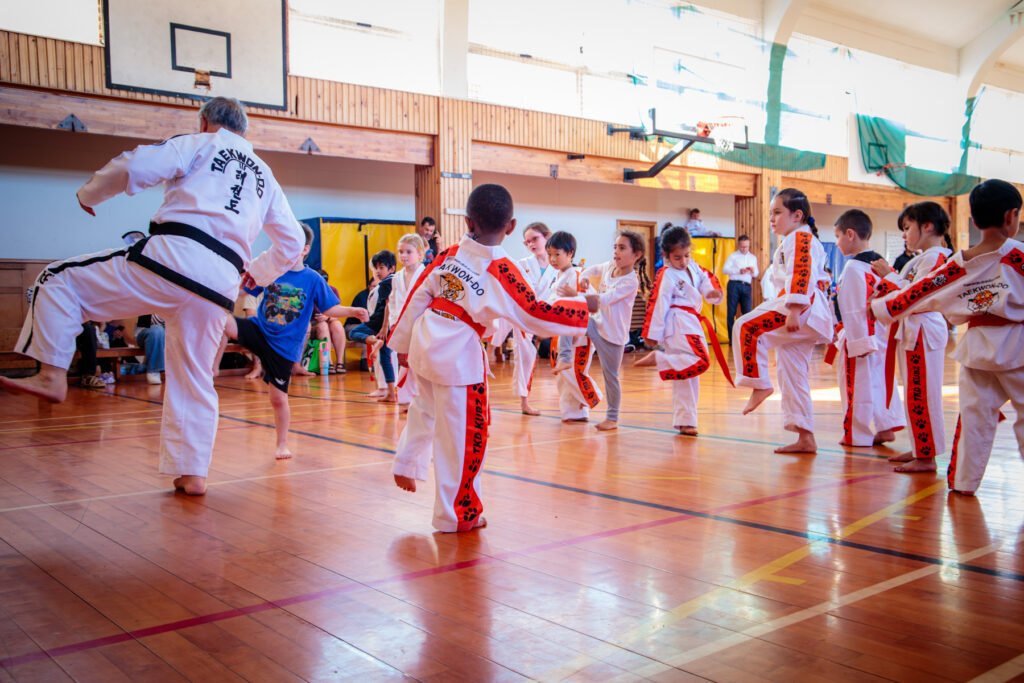
Children notice differences during martial arts training. When it comes to learning martial arts, understanding why comparing child progress with other students can be unhelpful protects young athletes from unnecessary emotional pressure. Children develop differently. Their experiences, confidence, physical development, learning styles, and previous experience are not identical. Progress is personal. At Tiger Taekwon-Do, we help parents support individual growth so every child builds lasting confidence.
Every Child Begins from a Different Starting Point
Two children may begin Taekwon-Do at the same age, yet their starting points may be completely different.
When comparing child progress, parents must remember that initial skill acquisition varies greatly.
One child may already have experience in another sport. Another may be new to structured physical activity. One may feel comfortable learning in a group, whereas another may need more time to become confident.
Some children learn by watching, and others need repeated practice. Some remember instructions immediately, while others improve gradually through repetition. The starting point matters.
According to research on youth sports psychology published by the National Institutes of Health, individual developmental readiness significantly impacts skill acquisition rates in children.
Comparing the final results without understanding the journey can create an inaccurate picture of development. A child who appears to be progressing slowly may actually be making significant progress from their own starting point.
Different Strengths Develop at Different Times
Children do not all develop the same abilities at the same time:
-
One student may have excellent flexibility.
-
Another may show strong concentration.
-
Someone else may demonstrate natural confidence or impressive determination.
-
A different student may struggle initially but show remarkable improvement over time.
Development is not a single competition with one definition of success.
Taekwon-Do involves many different qualities: technique, coordination, balance, focus, perseverance, confidence, and discipline can all develop at different rates. A child may be making progress in an area that is not immediately obvious, but that progress still matters.
Comparison Can Change the Meaning of Achievement
A child should be able to feel proud of their own improvement; however, comparison can sometimes change the question from “How much have I improved?” to “Am I better than someone else?”
That is a significant change.
When achievement becomes dependent on being ahead of another student, a child’s satisfaction may become fragile. They may feel successful only when they are ahead, or they may feel disappointed whenever another student progresses more quickly.
This can create unnecessary emotional pressure. Personal development should not depend entirely on winning a comparison.
The Danger of Creating Unintentional Pressure
Parents do not always intend to compare their children negatively, but a simple comment can sometimes have an unexpected effect:
“Look how quickly that student has learned. Your friend is already at the next level. Why can you not do it like them?”
Such comments may seem like motivation; however, children may hear something very different. They may believe that their own progress is not good enough. They may become worried about making mistakes, or they may avoid challenges because they fear falling behind.
Over time, this can affect their enjoyment of training. Encouragement is more effective when it focuses on the child’s own effort and development.
Compare Progress with the Past, Not with Another Child
A more useful question is:
“What can my child do today that they could not do before?”
This creates a meaningful way to recognise progress.
Perhaps a child is now more confident entering the training environment. Perhaps they can perform a technique with greater control, or they recover more calmly after making a mistake. These changes may be significant.
Looking backwards can help children recognise development that they may otherwise overlook. Progress becomes personal.
Patience Is Part of Development
-
Instead of comparing child progress week by week, focus on long-term skill retention.
Some children progress quickly in one stage and more slowly in another. This is normal.
Learning is rarely a perfectly straight line. There may be periods of rapid improvement followed by periods when development becomes less obvious. During these stages, patience becomes important.
A child may need more time to develop a particular skill. They may need additional repetition before a movement feels natural. That does not mean they are failing; rather, it means they are learning.
With continued effort, skills that once seemed difficult can become more comfortable and controlled.
Parents Can Help Children Understand Their Own Journey
Parents play an important role in helping children develop healthy attitudes towards progress.
Instead of asking whether a child is ahead of another student, parents can ask:
-
“What did you enjoy in training today?”
-
“What did you find easier this week?”
-
“What are you working to improve?”
-
“What are you proud of?”
These questions encourage self-awareness. They also help children understand that development is not simply about reaching a particular stage before somebody else. A child can learn to appreciate effort, improvement, and persistence.
Instructors See More Than a Single Result
-
Instructors look beyond basic metrics when comparing child progress over an entire training season.
Parents may naturally notice visible achievements. Instructors, however, observe students across their training journey. They may notice improved concentration, better control, stronger listening skills, or greater confidence.
These developments may not always be immediately visible to a parent watching from outside the training environment.
Communication with instructors can therefore help parents understand a child’s progress more fully. A student may be developing in ways that are not reflected by a simple comparison with another student.
Every Student Has a Different Journey
Taekwon-Do is not a race in which every child must reach each stage at the same time.
Each student brings a different personality, background, learning style, and set of experiences. Some children move quickly in certain areas, while others require more time. Both can develop into capable and confident students.
What matters is continued learning. A child who learns to focus on their own journey can develop a healthier attitude towards improvement. They can appreciate another student’s success without viewing it as evidence of their own failure.
That is a valuable lesson far beyond Taekwon-Do.
Conclusion
Comparing children can be tempting. Parents want to understand progress, identify challenges, and ensure that their child is developing well. However, direct comparisons with other students can sometimes create pressure that is neither necessary nor helpful.
Every child has a different starting point, learns differently, and develops at a different pace.
At Tiger Taekwon-Do, progress should be understood as a personal journey. The most meaningful comparison is often between where a child is today and where they began. Small improvements, quiet progress, and continued effort matter.
When children learn to focus on their own development, they can celebrate the success of others while continuing to build confidence in themselves.
Avoid comparing child progress with peers so your child stays motivated.
Call to Action
Encourage your child to focus on personal progress rather than comparing their journey with someone else’s. Help them recognise their own improvements, appreciate their effort, and understand that meaningful development takes time.
Join Tiger Taekwon-Do today and help your child build confidence, perseverance, and a positive attitude towards their own unique journey.
