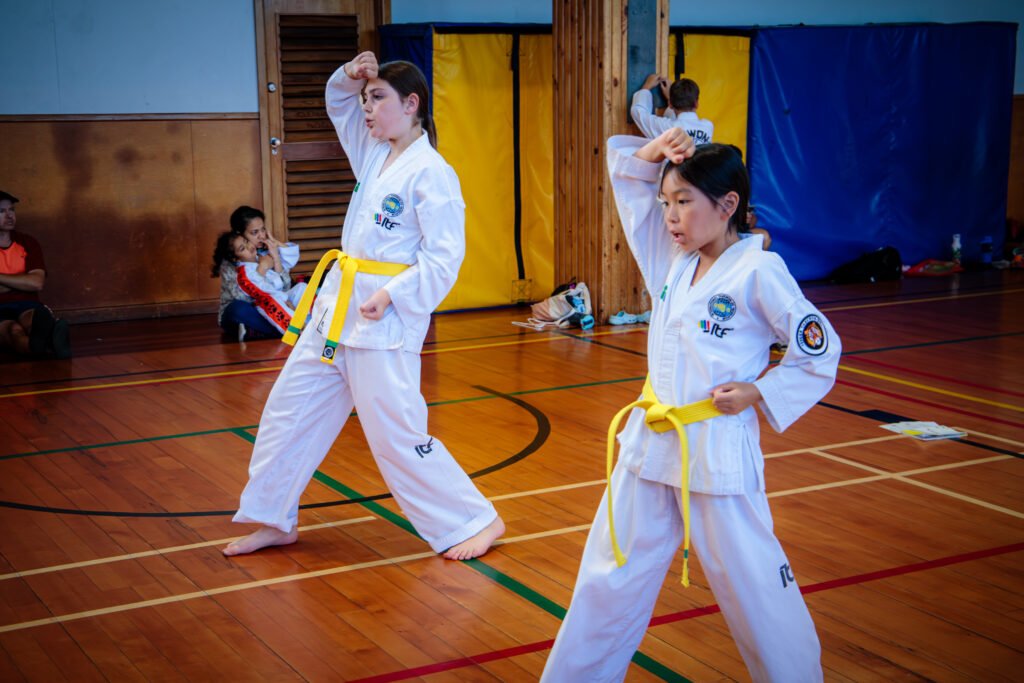
Nobody gets everything right the first time. Children make mistakes constantly while learning—they forget instructions, lose balance, perform a technique incorrectly, or struggle to remember a complex sequence.
For many children, getting something wrong feels deeply uncomfortable. They may worry about what others think, become frustrated, or avoid trying altogether out of fear of failure. Helping young students become comfortable making mistakes is therefore an essential part of healthy childhood development and lifelong emotional resilience.
Taekwon-Do provides a safe, structured environment with repeated opportunities to learn, make errors, receive guidance, and try again. At Tiger Taekwon-Do, we teach students that mistakes are not embarrassing setbacks, but natural stepping stones toward true mastery and personal growth.
Why Children Must Learn to Become Comfortable Making Mistakes Every learning process involves natural trial and error. When young students are encouraged to become comfortable making mistakes, they stop viewing temporary setbacks as permanent failures. Building this emotional resilience early in life helps kids tackle new challenges with enthusiasm rather than fear.
7 Proven Ways Kids Become Comfortable Making Mistakes
Re-Framing Mistakes as a Natural Part of Learning
A mistake does not mean a child lacks ability or intelligence. More often, it simply means they are stretching themselves to learn a complex physical or mental skill they have not yet mastered.
Learning requires active trial and error. A child must attempt a movement before understanding how to refine it. According to pediatric educational research indexed by the National Institutes of Health, children who view effort and error as part of skill development build higher self-efficacy, stronger emotional resilience, and better problem-solving abilities.
Overcoming the Fear of Being Wrong
Children who are afraid of failing often become hesitant in everyday life. They may avoid difficult academic challenges, wait for someone else to answer in class, or quit an sport when the physical demands become hard.
A child cannot improve a skill they are unwilling to attempt. By encouraging students to become comfortable making mistakes, martial arts training removes the stigma around failure and encourages active, confident participation in new activities.
Belt tests and grading events are natural pressure environments for young martial artists. During a grading, a child must perform patterns, techniques, and sparring in front of instructors, parents, and peers. When students learn to become comfortable making mistakes during regular training, they approach grading events with a completely different mindset. Instead of viewing an evaluation as a scary test where failure must be avoided at all costs, they see it as a positive opportunity to demonstrate their current progress. If a technique is not executed perfectly, they understand that feedback from examiners is simply guidance for their next stage of development, helping them stay comfortable making mistakes while progressing toward their next belt level.
Using “Try Again” to Build a Powerful Growth Mindset
The phrase “try again” is central to martial arts practice. It shifts the student’s entire mental focus away from an imperfect attempt and onto the very next opportunity for success.
A child might perform a block or kick incorrectly, but that attempt provides immediate visual and physical feedback. The next attempt can be slightly better, followed by another refinement. Over time, students learn that real improvement always comes through persistent practice rather than innate talent.
Learning That Progress Is Built Through Adjustment
Skill building is rarely about immediate perfection; it is about continuous micro-adjustments. Instructors provide gentle, actionable feedback, and students learn to adjust their stance, balance, breath, or timing.
When kids learn to examine errors calmly, they stop seeing mistakes as personal failures. Instead, they begin using errors as useful feedback to guide their next physical improvement.
Parent Support: How to Help Kids Feel Comfortable Making Mistakes at Home
Parents play a major role in reinforcing how children handle failure. Instead of focusing solely on wins or perfect execution, parents can ask constructive questions after training:
-
“What did you learn from that difficult attempt today?”
-
“What could you adjust next time you try that technique?”
-
-
Praise the Effort, Not Just the Result: Acknowledge how hard your child tried, even if the attempt was imperfect. This helps kids remain comfortable making mistakes while trying difficult things.
-
Normalize Your Own Setbacks: Share small mistakes you made during your day and how you fixed them. Children model adult behavior, and seeing parents stay calm during errors teaches them that mistakes are manageable.
“Which part of the sequence felt easier than last week?”
-
Realistic encouragement helps children focus on long-term personal growth rather than short-term embarrassment.
Building True Confidence by Handling Difficult Moments
Real self-confidence does not come from doing everything perfectly on the first try; it comes from surviving moments of difficulty and coming out stronger on the other side.
A child might feel disappointed after failing a board break or forgetting a belt pattern. But when they take a breath, adjust their focus, and try again, the moment passes. The student learns firsthand that making a mistake is uncomfortable, but entirely manageable.
Keeping Individual Moments in Perspective
One incorrect movement does not define a child’s overall athletic ability, nor does one tough class define their entire martial arts journey.
By practicing in a supportive, structured environment, young students learn to keep individual setbacks in proper perspective. This prevents a temporary challenge from turning into a permanent negative belief about their capabilities.
FAQ: Helping Children Overcome Mistakes
How can I help my child if they get upset when making a mistake?
Encourage them to pause, take a deep breath, and focus on the process rather than the outcome. Remind them that every expert was once a beginner who refused to give up.
Why is martial arts effective for teaching kids resilience?
Martial arts breaks complex skills into small, measurable steps. Students experience immediate feedback in a supportive environment where trying again is standard practice.
What should I do if my child wants to quit after making a mistake?
Acknowledge their feelings without immediately agreeing to let them quit. Encourage them to try one more session after taking a breath. Martial arts training teaches kids that discomfort passes quickly once they take another attempt.
Conclusion
Mistakes are an unavoidable part of growth. When children become comfortable making mistakes, they become far more willing to embrace new challenges, accept constructive feedback, and keep improving in school, sports, and life.
At Tiger Taekwon-Do, children experience this positive cycle every week: try, adjust, learn, and try again. The goal is not to eliminate every mistake, but to give children the tools, resilience, and confidence to navigate them successfully.
Call to Action
Help your child view mistakes as stepping stones to success.
Explore our Tiger Taekwon-Do Programs today and discover how our structured classes build confidence, resilience, and a positive growth mindset for life.
