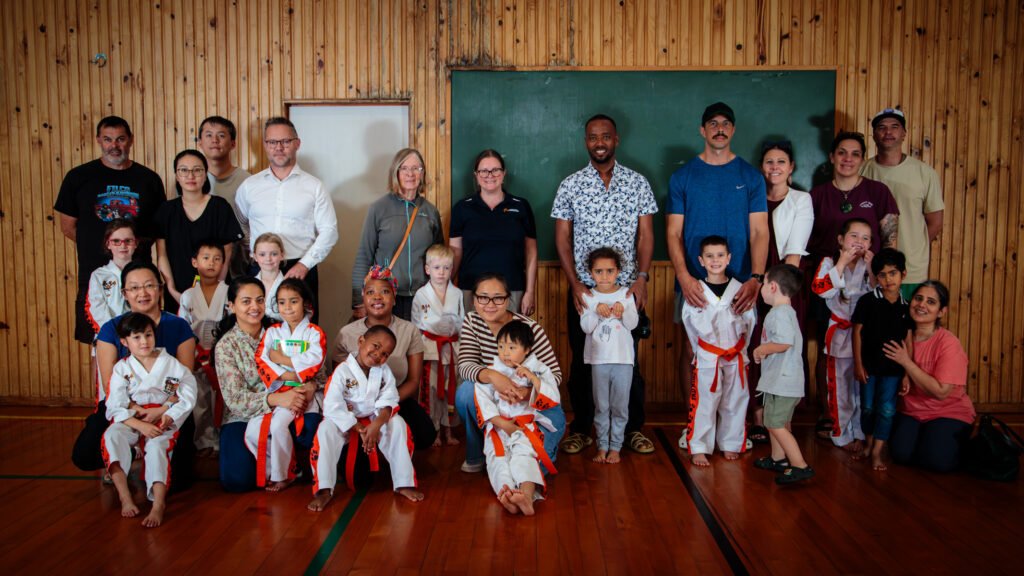
Every parent wants to see their child succeed. They want their child to grow in confidence, develop discipline, overcome challenges, and feel proud of their achievements. Supporting these goals is a natural part of parenting.
However, there is an important difference between encouraging a child and putting pressure on them. Understanding how to support your child’s Taekwon-Do journey without creating anxiety helps set them up for long-term growth.
Children often respond positively when they feel supported. They may become more willing to practise, try difficult techniques, and continue working through challenges. Pressure, however, can make an activity feel like another test they must pass.
This martial arts experience is a personal Taekwon-Do journey. Every child develops at a different pace; therefore, the role of parents is not to control every stage of that process. It is to provide encouragement, understanding, and the right support.
At Tiger Taekwon-Do, children are guided by instructors while developing their skills through regular training and personal effort. Parents can strengthen this experience by creating a positive environment outside the training hall.
Encouragement Is More Powerful Than Pressure
Children need to know that their efforts matter. A simple comment such as: “I can see how hard you are working” can have a powerful effect because it recognises effort rather than focusing only on results.
Pressure often sounds different. A child may hear:
-
“You should be improving faster.”
-
“Why are you not at the same level as that student?”
-
“You must pass your next grading.”
-
“You cannot give up now.”
Although parents may say these things because they want the best for their child, repeated pressure can create anxiety. Encouragement creates space for growth, whereas pressure can make children afraid of making mistakes.
According to global guidelines from the World Health Organization, positive support and regular physical activity directly improve self-esteem and emotional well-being in young people.
Focus on Effort Rather Than Immediate Results
Progress on any Taekwon-Do journey is not always obvious. A child may spend weeks improving a small part of a technique. Another student may progress quickly in one area but require more time in another.
Comparing results can create unnecessary frustration. Instead, parents can focus on the effort behind the progress:
-
Has your child attended consistently?
-
Have they tried to improve their techniques?
-
Have they continued after finding something difficult?
These questions often reveal more about development than a belt colour or a particular achievement. Progress takes time and patience.
Allow Children to Develop at Their Own Pace
Every child is different. Some children become confident quickly, while others need more time to feel comfortable in a new environment. Some students enjoy challenges immediately; others develop confidence gradually.
There is no single timetable for personal development on a Taekwon-Do journey. Parents can support their child by allowing them to grow at a healthy pace. This does not mean lowering expectations—it means understanding that meaningful development cannot always be rushed. A child who is given time to build genuine confidence may develop a stronger foundation than a child who feels constantly pushed to perform.
Listen When Your Child Faces a Difficult Period
Even children who enjoy martial arts may experience challenging periods throughout their Taekwon-Do journey. They may feel tired, struggle with a particular technique, or become frustrated after making mistakes. Sometimes, they may simply have a difficult day.
Listening can make a significant difference. Instead of immediately saying, “You must keep going,” parents can ask:
-
“What has been difficult recently?”
-
“What part of training are you finding challenging?”
-
“How can we support you?”
These questions encourage children to explain their feelings. Understanding the problem is often the first step towards finding the right solution.
Do Not Turn Every Training Session into a Performance Review
A child does not need to be questioned about every detail of every class:
-
“Did you improve today?”
-
“Did you perform better than the other students?”
-
“Did the instructor praise you?”
Constant questioning can make training feel like an examination. Sometimes, a simple question is enough: “Did you enjoy your training today?” This gives children an opportunity to share their experience without feeling that they must provide evidence of success. Training should remain a positive part of their life.
Celebrate Small Improvements
Large achievements are exciting; however, small improvements often represent important progress. A child may:
-
Remember a technique more accurately
-
Show greater patience during practice
-
Attempt something that previously seemed difficult
-
Recover more calmly after making a mistake
-
Become more comfortable participating in class
These moments deserve recognition. Small steps become significant over time. Celebrating them helps children understand that development is not only about reaching a final goal—the Taekwon-Do journey itself contains many achievements.
Let Instructors Guide the Training Process
Parents have an important role in supporting their children, but instructors have a distinct role within the dojang. At Tiger Taekwon-Do, instructors guide students through their training and understand the development process within the training environment.
Parents do not need to become additional instructors at home. Instead, they can support the lessons being taught by encouraging regular attendance, listening to their child, and maintaining a positive attitude towards training. A strong partnership between parents, children, and instructors creates a more positive experience.
Support Does Not Mean Giving Up at the First Difficulty
There is also a difference between avoiding pressure and allowing a child to abandon every commitment when something becomes difficult. Children need support when they face challenges.
Sometimes, the best response is encouragement to continue. At other times, a conversation may reveal that a genuine problem needs attention. The key is understanding the reason behind the difficulty:
-
Is the child tired?
-
Is another activity creating a scheduling problem?
-
Is a particular challenge causing frustration?
-
Is the issue temporary?
Thoughtful support begins with understanding how to guide a child through challenges along their Taekwon-Do journey.
Conclusion
Parents play an important role in a child’s Taekwon-Do journey. The most effective support does not always come from pushing children to achieve more. Often, it comes from listening, encouraging effort, celebrating progress, and allowing children to develop at their own pace.
Children need guidance, but they also need space. At Tiger Taekwon-Do, instructors provide structured guidance during training. At home, parents can reinforce that experience by creating an environment where effort is valued and challenges are approached positively.
Encouragement builds confidence. Patience supports development. Understanding creates trust. Together, these qualities can help children enjoy their Taekwon-Do journey while continuing to grow.
Call to Action
Support your child’s Taekwon-Do journey with encouragement, patience, and understanding. Help them recognise their progress, learn from challenges, and take pride in their own personal development.
Visit Tiger Taekwon-Do today to learn more about our programs and give your child the support they need to grow with confidence, perseverance, and a lasting love of learning!
